Please ensure Javascript is enabled for purposes of website accessibility
A Tale of Two Housing Markets: Why Real Estate Is More Divided Than Ever in 2025

A Tale of Two Housing Markets: Why Real Estate Is More Divided Than Ever in 2025

The U.S. housing market in 2025 is deeply divided. Some people are building wealth through rising home values, while others are struggling just to pay rent. This growing gap has created two very different housing markets—and the divide is only getting worse.


1. Homeowners Are Winning, Renters Are Struggling

One of the biggest divides is between homeowners and renters.

  • Homeowners, especially those who bought before 2022, are locked into low mortgage rates. Many are paying less than 4% interest and have built up a lot of home equity.

  • Renters, on the other hand, face higher housing costs. Monthly rent prices have increased sharply in many cities, and buying a home is harder than ever due to high prices and interest rates.

This “lock-in effect” means fewer homes are for sale, making it tough for renters to enter the market.

2. City vs. Suburbs: Where People Are Moving

Since the pandemic, people have been moving out of crowded cities and into the suburbs or rural areas.

  • Urban housing markets are slowing down. Places like New York and San Francisco are still recovering.

  • Suburban and rural housing markets are booming, especially in states like Texas, Florida, and North Carolina.

This shift is driven by remote work, more space, and better affordability outside city centers.

3. Luxury Homes Sell Fast—Starter Homes Are Scarce

There’s also a divide between high-end and entry-level homes.

  • Luxury homes are still in demand. Many buyers pay in cash and aren’t affected by interest rate hikes.

  • Affordable homes are very hard to find. Rising construction costs and local building rules make it difficult to build small, affordable houses.

This makes it especially hard for first-time homebuyers to get started.

4. Different Markets in Different States

The housing market varies a lot depending on location.

  • States like Florida, Texas, and Arizona are seeing fast growth.

  • Some cities like Austin and Boise, which had major booms during the pandemic, are now seeing home prices drop.

These regional differences mean that national trends don’t tell the full story.

5. Economic Impact of the Housing Divide

This split in the housing market affects more than just real estate.

  • People can’t move for jobs if they can’t afford a new home.

  • Renters can’t build wealth the way homeowners can.

  • The construction industry is slowing down due to high costs and labor shortages.

All of this can slow down economic growth and increase wealth inequality.

6. How to Fix the Two-Tier Housing Market

Fixing this housing divide won’t be easy, but there are solutions:

  • Change zoning laws to allow more affordable housing.

  • Offer down payment help for first-time buyers.

  • Support the construction of rental housing.

  • Make the permitting and building process faster and cheaper.

These steps can make housing more fair and accessible for everyone.

How Many Homes Are Investors Actually Buying?

How Many Homes Are Investors Actually Buying?

Are big investors really buying up all the homes today?

If you’re trying to find a house to buy, this may be something you’re wondering about. Maybe you’ve read about it or seen reels on social media saying investors buying all the homes is making it even harder to find what the average buyer is looking for. But spoiler alert – there’s a lot of misinformation out there. To clear things up, here’s the scoop on what’s really happening. A lot of the big investor activity is actually in the rearview mirror already.

The Wall Street Journal (WSJ) explains:

“Investors of all sizes spent billions of dollars buying homes during the pandemic. At the 2022 peak, they bought more than one in every four single-family homes sold, though more recently their activity has slowed as interest rates rose and supply became tighter.”

The key here is investor activity has slowed significantly, and even during the peak of investor buying, 3 out of every 4 single-family homes purchased were by regular, everyday buyers – not investors. And of the investors who bought over the past few years, most weren’t the big investors you may be hearing about. The vast majority were small mom-and-pop investors – people like your neighbors who own only a couple of homes, maybe even just their main residence and a vacation home.

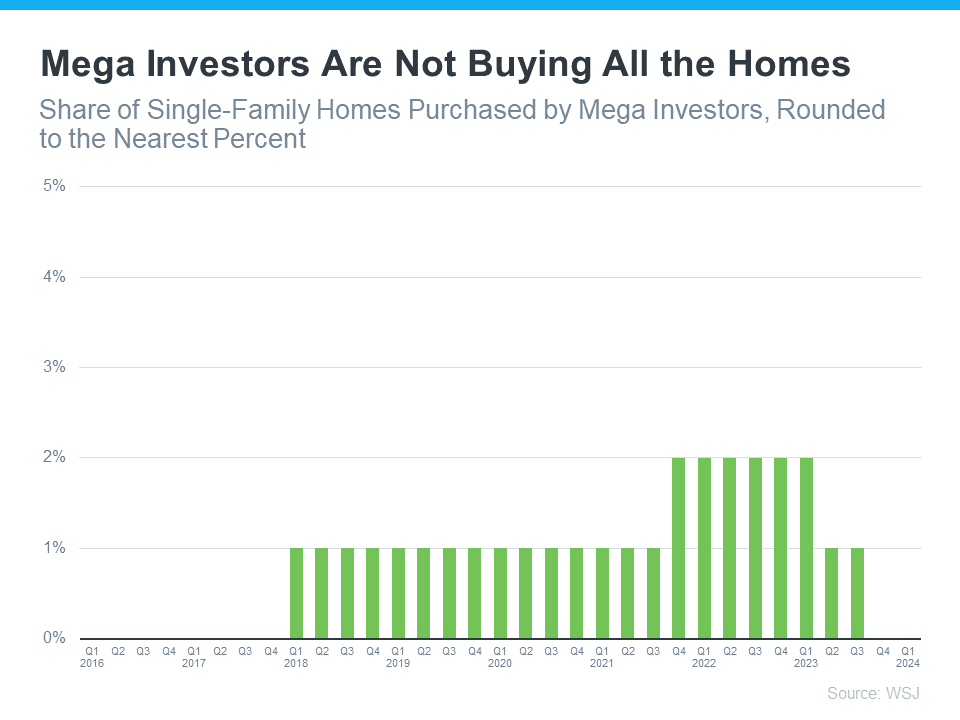
But let’s focus on the giant, mega-investor firms since that’s what is being talked about so frequently on social media right now. Mega investors are those who own 1,000+ properties. You may be surprised to see that, according to the Wall Street Journal, they don’t buy all that many homes (see graph below):

No Caption Received

This graph tells us two things. First, institutional investors were never buying a large percentage of available homes. During the peak in 2022, they bought about 2% of available single-family homes. Second, that percentage has gotten even smaller recently (so small the number rounds down to 0%).

In an effort to understand why that percentage is trending down, private lender RCN Capital asked investors about the challenges they’re facing. Here’s what Jeffrey Tesch, CEO of RCN Capital, found out:

“Investors are already facing many challenges in today’s housing market – rising prices, limited inventory, and higher financing costs.”

Understanding these challenges is important because they show big, mega investors aren’t taking over the housing market.

So, don’t fall for everything you hear. They aren’t snatching up all the homes and making it impossible for regular people to buy

Bottom Line

Big investors aren’t buying all the homes out there. If you’ve got questions about what you’re hearing about the housing market, chat with a local real estate agent. They can help you understand what’s really going on.